|
Meet
Grace, the Very First Friendly Gray Whale! |
|
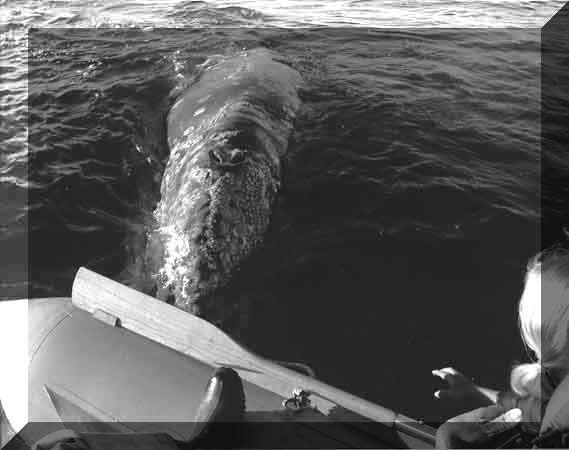

It
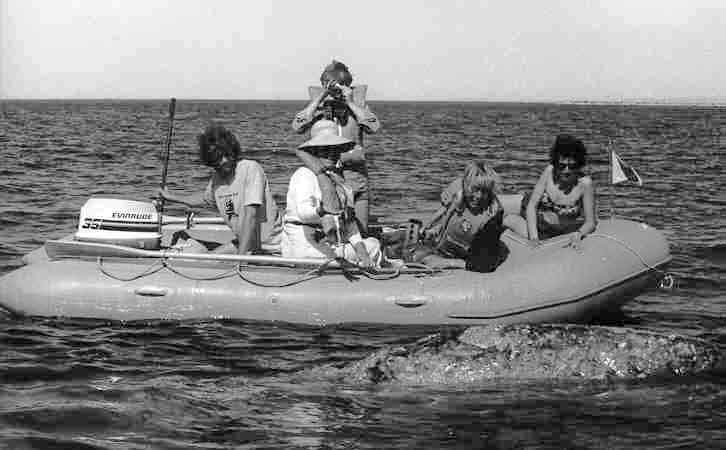
all began one day
in 1977 when an awesome and totally unexpected incident occurred! It was
first terrifying, and quickly became delightful
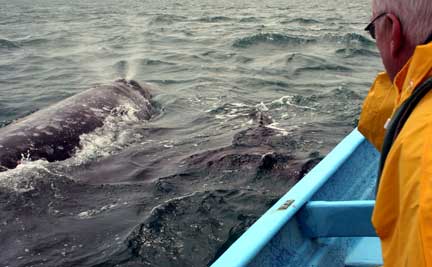
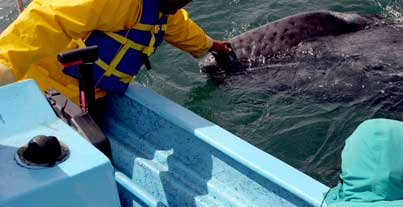
beyond words! A gray whale came over to my whale-watching Zodiac, touched our small boat gently, and allowed
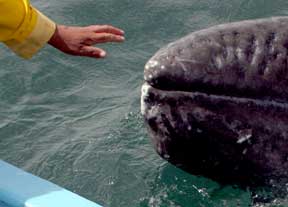
itself to be petted by us all. It even reached out with its rostrum
("nose") to touch our outstretched hands. Fran began to
sing Amazing Grace. The happy whale stayed for two hours! Everyone
sang. Her name is Grace, of course. She was a teenage female, and
blew bubbles beneath our small gray Zodiac inflatable, an activity long
observed between mother and calf, and considered to be playful and
friendly. And that was the beginning...
Grace
left. And returned often over many years. And others came. A
few at first, then more joined in as the years passed. Mothers
brought baby whales to share this experience. Now, increasing numbers of
wild gray whales are "friendly," and human visitors
seek this opportunity to celebrate this experience themselves.
To say
that a friendly whale encounter is enjoyable or meaningful is to
fail to seek out the best words. But words really do fail here. Eloquent people
have resorted to silent smiles and wide, wide eyes that communicate more
than the "Ohhh!" or "Wow!" so
often heard when a whale touches one's hand. I have seen distracted
photographers set their film-exhausted cameras onto hard, wet
skiff bottoms in order to devote both hands and mind to the delightful
passion of responding to the whale's presence. With time for
reflection, people have compared the emotional impact of this first
encounter with a friendly whale with that of making love. I can relate the experience to witnessing a
very long total solar eclipse for the
first time.
Astonishing! And never to be forgotten.
The whales obviously
enjoy this, too. I have been sternly accused of anthropomorphizing
more than once. However, such are the thoughts of stuffy folks who fail
to associate academic inquiry with the equally valid magic of nature.
I remain convinced that these friendly gray whales are people
watching. Dr. Raymond M. Gilmore was for many years the San Diego Natural
History Museum's respected marine biologist. Ray knew the gray whales
better than anyone. When this "friendly" phenomenon began, Dr.
Gilmore stated his belief that this was the whales' response to whale
watching as it was being done; he believed the whales were telling
us that our presence was ok with them. Me, too!
When Charles M. Scammon,
the American whaler, sailed down from San Francisco in the 1850's and
60's to kill the whales for their oil, the animals' response was very
different, though equally reasonable. Gray whales soon earned the
name "Devil Fish" from the whalers, probably because they sent
many a whaler to Hell with a flick of their one-ton tail! The grays
would viciously attack the whaling skiffs and defend their young with
their lives when attacked within their lagoons. This was a violent response to humans who were sharing
their waters with deadly intentions, rather than in the mood of peaceful
inquiry that characterized those of us in the 1960's and '70's, as well
as the whale watchers of today.
Could the whales'
response be indicative of thought processes? Of intelligence? Or
maybe even a sense of humor?
© Piet Van de Mark
1984, 2017.
|
|
Remember black & white film?
These photos are from the old days when color film was soooo slow,
and Tri-X offered the dazzling film speed of 400 ASA, enough to allow a
shutter speed that would freeze the motion of animal subjects.
Today, 400 - 3200 ISO digital is the cat's meow for freezing
friendly whales. |
|

|
Another photograph from the
old Black & White days of 1978...
This
16' baby gray whale is looking up at me and enjoying the vibrations and
sounds of the outboard as it idles in neutral.
This
baby is on it's side, its right side up, flipper visible and eye clearly
watching from above the slight curve at the back of its closed mouth.
The typical "pickle dimples" and relatively short
"rostrum" (or nose) evidence its age--not more than a
couple of months.
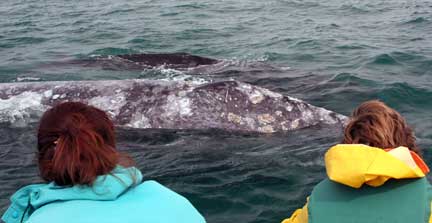
If
that's not exciting enough, check out the form of the barnacle-blotched
40' mother whale floating quietly just at the surface right behind the
motor and gently touching her child. |
|
In those "Good ol' Days" of the
'70's, we operated our own whale camp--Mas Cafe--with those wonderful Zodiac inflatable
boats that Jacques Cousteau made famous.
Being gray and somewhat flexible, some
of our guests suggested that perhaps the gray whales just naturally loved the
Zodiacs?
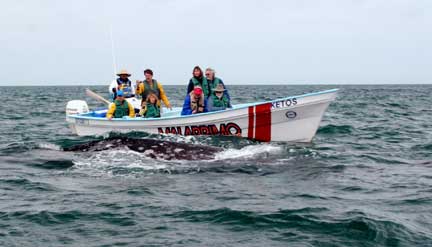
A pleasant thought; however, today we find friendly gray whales are very much
attracted to white fiberglass boats.
The truth, we believe, is that they are
truly attracted to the friendly people inside the boats. |
| Now, four decades later,
those California gray whales who choose to be friendly, are more
friendly than ever, and still bringing their month-old 16 foot kids over to meet our
guests and learn about people watching! Some of the new crop of baby whales are now perhaps
third-generation friendlies. Today, we're able to capture similar
photos with far greater ease and in color with modern digital cameras.
Please see below to visit The Best of Baja page and see
more whale photos from recent whale seasons...
|
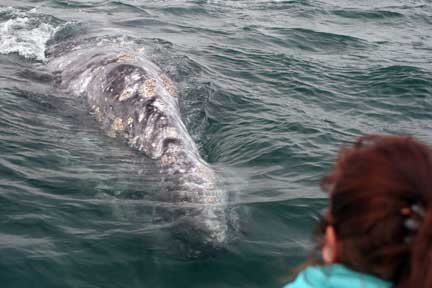
| This friendly and curious little California
gray whale was born in Scammon's Lagoon in 2009, the year this picture
was taken.
It's Mom has brought it over to our boats
and given her OK to come close, perhaps to share her curiosity about the
people in the boats who seem to be friendly.
Friendly whales sometimes interact with boats
in a manner comparable |
 |
to interaction frequently observed with their own
species when they seem to be at play.
The baby's youth - just a couple of
months - is distinguished by the pickle-like dimples on the front of its
stubby head head.
The eye is visible just to the left of
the point where the line of the whale's mouth enters the water; the eye
is partially open and just above the waterline after taking a quick
glimpse of us in the boat. |
|
Friendly whales will sometimes swim slowly by very close to the
boat. Some just come over and hang out for a few minutes. In 2009 a mother and
her baby stopped by and stayed with us for two hours! Unfriendly whales? Never
met one. Most whales just go about their own business and let us whale watchers
do the same.
|
 |
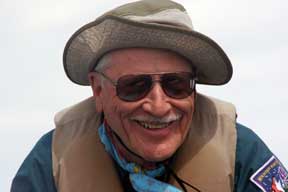
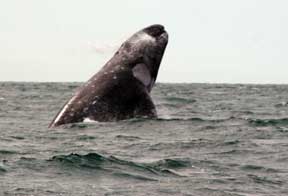
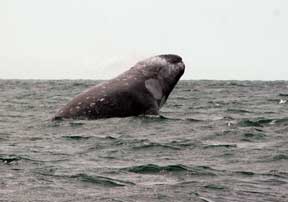
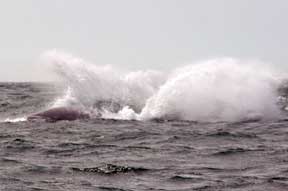
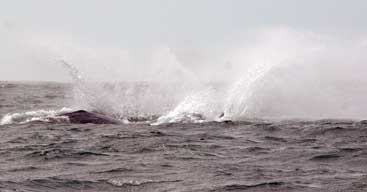
When a young gray whale
breaches within shooting distance of our boat, one must be very, very
quick with the telephoto to get on target.
The breach is over in under
two seconds...but Roger's smile lingers on... |
|
We hope you're ready now to meet - and
hopefully to be
touched by - your own friendly gray whale. This coming season, we offer two personally escorted
learning vacations into the heart of Baja's Enchanted Peninsula right in the heart of "prime
time". Check out The Best of Baja page for
details...or better yet, give us a call request your Baja Brochure, and let's talk about it! We'd enjoy chatting
with you about your interests and what our learning vacation may offer you.
Piet & Mary Van de Mark
|
|
|
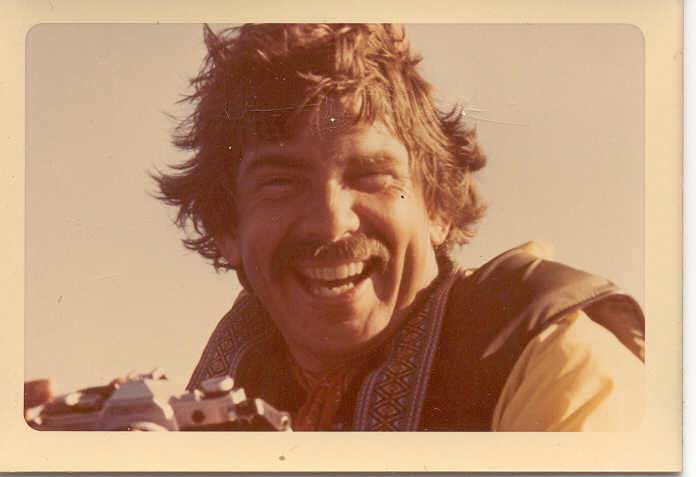
Remember how those color snapshots from the '70's fade over the years?
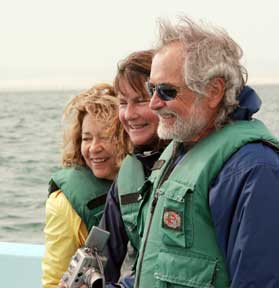
You'll find Piet's smiles haven't faded at all when it comes to visiting
and re-visiting and sharing our experiences in the Enchanted Peninsula
of Baja California.
This smile was usually constant while running his
Zodiac and taking pictures of whales, guests, birds, sunsets...whatever
moved his imagination.
Mary's smile is best when she's
surrounded by the Sonoran Desert...forests of Boojums and blooming plants and
cactus; or smiling back at a curious baby gray whale!
Those early days of the whale-watching
base camps
and the Zodiacs and four-wheel drive adventures are in the
past now, but the experience lingers on in Baja California and the Greater American Southwest.
Piet & Mary invite you to join them for
a memorable learning vacation. Choose one that sparks your imagination, and
give them a call !
|

|
|
Now
Reserving:
March 16-24, 2019
Limited
to 16 Guests.
|
|
Many
Seasons Sell
Out early. Don't
Wait: Anticipate!
|
QUESTIONS &
RESERVATIONS?
Contact us by phone:
520-887-2340
(Tucson, Arizona)
piet@bajasfrontiertours.com ©Baja's
Frontier Tours LLC - Tucson, Arizona 2004
& 2009
January 10, 2019 
Home
Page
|
|